
The Future of Automation: Revolutionizing Business Operations
In the ever-evolving landscape of global business, automation stands at the forefront of innovation, reshaping how companies operate, compete, and deliver value. The integration of advanced technologies like artificial intelligence (AI), machine learning (ML), robotic process automation (RPA), and the Internet of Things (IoT) is no longer a futuristic concept—it is a present-day reality. Businesses across industries are leveraging automation not just to streamline operations but to unlock unprecedented levels of efficiency, accuracy, and scalability. The result? A transformative shift that is redefining traditional business models and creating new opportunities for growth and innovation.
As we stand on the brink of this technological revolution, it is essential to understand the driving forces behind automation’s rapid adoption. The convergence of data availability, computational power, and algorithmic sophistication has made automation more accessible and effective than ever before. Companies that embrace this transformation are not only optimizing their internal processes but also enhancing customer experiences, reducing costs, and gaining a competitive edge in an increasingly digital marketplace. This article explores the profound impact of automation on businesses today and what the future holds as these technologies continue to mature.
Why Automation is the Next Business Imperative
The Rise of Intelligent Automation
Traditional automation—characterized by rule-based systems and repetitive task execution—has evolved into intelligent automation, where AI and ML enable systems to learn, adapt, and make decisions autonomously. Unlike its predecessors, intelligent automation can handle complex, unstructured data, recognize patterns, and even predict outcomes. This shift is empowering businesses to automate not just back-office functions but also high-value activities such as customer service, supply chain management, and strategic decision-making.
For instance, customer service departments are deploying AI-powered chatbots that can resolve queries in real-time, reducing wait times and improving satisfaction. In supply chains, predictive analytics powered by automation helps businesses anticipate demand fluctuations, optimize inventory levels, and minimize disruptions. The ability to process vast amounts of data in real-time allows companies to respond swiftly to market changes, making intelligent automation a critical driver of agility and resilience.
Cost Efficiency and Operational Excellence
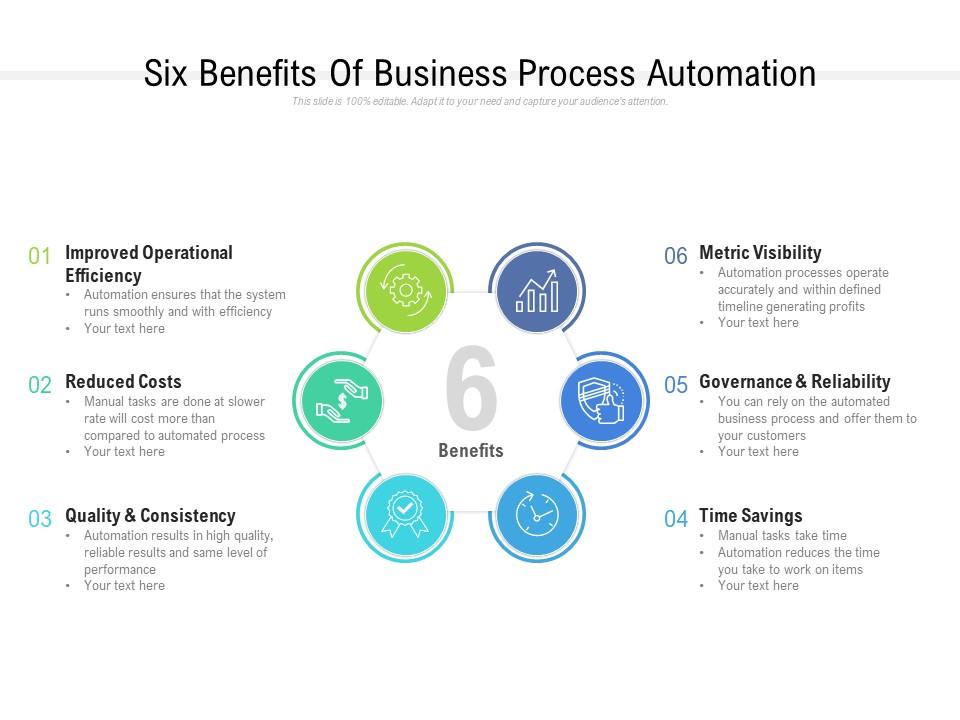
One of the most compelling reasons businesses are turning to automation is its potential to drive significant cost savings. By automating repetitive and time-consuming tasks, companies can reduce labor costs, eliminate human errors, and allocate human resources to more strategic roles. According to a McKinsey report, automation could potentially generate $2.7 trillion to $6.1 trillion in economic value annually by 2025, with a substantial portion coming from operational efficiencies.
Moreover, automation enhances operational excellence by ensuring consistency and precision. Machines do not suffer from fatigue or lapses in attention, which means tasks such as data entry, quality control, and transaction processing can be executed with near-perfect accuracy. This reliability not only improves product and service quality but also builds trust with customers and partners. In industries like manufacturing and healthcare, where precision is paramount, automation is proving to be a game-changer.
Enhancing Customer Experiences Through Automation
In today’s hyper-competitive business environment, customer experience (CX) is a key differentiator. Automation is playing a pivotal role in elevating CX by enabling personalized, seamless, and responsive interactions. AI-driven tools such as recommendation engines, virtual assistants, and dynamic pricing algorithms are helping businesses tailor their offerings to individual customer preferences. For example, e-commerce giants like Amazon use AI to analyze browsing and purchasing behavior, providing personalized product recommendations that boost sales and customer loyalty.
Automation also accelerates response times, a critical factor in customer satisfaction. Automated ticketing systems in customer support ensure that inquiries are routed to the right department without delay, while sentiment analysis tools gauge customer emotions in real-time, allowing businesses to address concerns proactively. By automating routine interactions, companies can focus their human agents on complex issues that require empathy and nuanced problem-solving, thereby enriching the overall customer experience.
Industry-Specific Transformations Through Automation
Manufacturing: The Smart Factory Revolution
The manufacturing sector has been at the vanguard of automation adoption, with the rise of smart factories powered by IoT, AI, and robotics. These advanced facilities leverage real-time data from sensors and connected devices to optimize production lines, monitor equipment health, and predict maintenance needs. The result is a significant reduction in downtime, improved product quality, and enhanced operational efficiency. Companies like Tesla and Siemens are already showcasing the potential of Industry 4.0, where cyber-physical systems collaborate seamlessly to create highly adaptable and efficient manufacturing environments.
Automation in manufacturing extends beyond production floors. Supply chain automation, enabled by AI-driven logistics platforms, ensures just-in-time inventory management, reducing holding costs and minimizing waste. Robotics, such as collaborative robots (cobots), work alongside human workers to handle repetitive tasks like assembly and packaging, improving safety and productivity. As these technologies become more affordable and accessible, small and medium-sized manufacturers are also beginning to reap the benefits of automation.
Healthcare: Precision and Efficiency in Patient Care
In healthcare, automation is revolutionizing patient care, administrative processes, and medical research. AI-powered diagnostic tools, such as IBM Watson Health and Google DeepMind, are assisting doctors in identifying diseases like cancer with greater accuracy and speed. Robotic surgery systems, such as the da Vinci Surgical System, enable minimally invasive procedures with enhanced precision, reducing recovery times and improving patient outcomes. Automation is also streamlining administrative tasks, such as billing, scheduling, and electronic health record (EHR) management, freeing up healthcare professionals to focus on patient care.
The impact of automation in healthcare is not limited to clinical settings. Drug discovery, a traditionally time-consuming and costly process, is being expedited by AI algorithms that analyze vast datasets to identify potential drug candidates. Additionally, automation is playing a crucial role in managing the COVID-19 pandemic, from contact tracing apps to automated testing and vaccine distribution systems. As the healthcare industry continues to grapple with rising costs and increasing patient demands, automation offers a pathway to sustainability and improved care delivery.
Finance: Unlocking Efficiency and Security
The financial services sector is another industry where automation is driving transformative change. From fraud detection to algorithmic trading, AI and ML are enhancing the speed, accuracy, and security of financial operations. Automated underwriting systems in insurance and lending institutions assess risk profiles and approve applications in real-time, reducing processing times from days to minutes. In banking, chatbots and virtual assistants handle customer inquiries, while robotic process automation (RPA) automates transaction reconciliations and compliance reporting.
One of the most significant advantages of automation in finance is its ability to mitigate risks. AI-driven fraud detection systems analyze transaction patterns in real-time, flagging suspicious activities before they escalate. Blockchain technology, combined with smart contracts, is further enhancing security by providing immutable records of financial transactions. As financial institutions navigate regulatory complexities and increasing customer expectations, automation serves as a critical enabler of both compliance and innovation.
The Human Element: Balancing Automation and the Workforce
Reskilling and Upskilling for the Future
While automation is undeniably transforming the business landscape, its success hinges on the workforce’s ability to adapt. The fear that automation will render human workers obsolete is largely unfounded; instead, the narrative is shifting toward augmentation. AI and automation are designed to complement human skills, not replace them entirely. Roles that require creativity, emotional intelligence, and complex problem-solving remain firmly within the human domain. However, the nature of work is evolving, and employees must acquire new skills to thrive in an automated environment.
Businesses are increasingly investing in reskilling and upskilling programs to prepare their workforce for the future. For example, companies like AT&T and JPMorgan Chase have launched initiatives to retrain employees in data analytics, cybersecurity, and AI-driven processes. Governments and educational institutions are also stepping up, offering online courses and certifications in emerging technologies. The key to a successful transition lies in fostering a culture of continuous learning, where employees are empowered to embrace change and develop competencies that align with the demands of an automated workplace.
Ethical Considerations and Workforce Impact
As automation becomes more pervasive, ethical considerations come to the forefront. The displacement of workers in certain industries is a valid concern, particularly for roles that are highly repetitive and routine-based. Policymakers, business leaders, and society at large must address these challenges by implementing measures such as universal basic income (UBI), social safety nets, and policies that incentivize job creation in emerging sectors. Transparency in automation deployment is also crucial to ensure that decisions are made ethically and inclusively.
Another ethical dimension is the potential for bias in automated systems. AI algorithms trained on biased data can perpetuate and even amplify existing inequalities. For instance, automated hiring tools have been criticized for favoring certain demographics over others due to flawed training datasets. To mitigate these risks, businesses must prioritize diversity in training data, implement robust testing protocols, and establish oversight mechanisms to monitor AI-driven decisions. By adopting ethical frameworks and responsible AI practices, companies can harness the power of automation while safeguarding societal values.
Emerging Trends: What’s Next for Automation?
The Convergence of AI, IoT, and Edge Computing
The future of automation lies in the seamless integration of AI, IoT, and edge computing. While cloud computing has been instrumental in enabling large-scale data processing, edge computing brings computation closer to the data source, reducing latency and enhancing real-time decision-making. This convergence is particularly impactful in industries like autonomous vehicles, smart cities, and industrial IoT, where split-second responses are critical. For example, self-driving cars rely on edge computing to process sensor data instantly, enabling safe navigation in dynamic environments.
AI’s role in this ecosystem is expanding beyond traditional machine learning models. Emerging technologies such as generative AI, which can create new content, designs, and solutions, are opening up entirely new avenues for automation. In creative industries, AI-powered tools are assisting in content generation, from writing and music composition to graphic design. As these technologies mature, they will further blur the lines between human and machine capabilities, creating opportunities for unprecedented innovation.
Hyperautomation: The Next Frontier
Hyperautomation is a concept that takes automation to the next level by combining multiple technologies—such as RPA, AI, ML, process mining, and low-code platforms—to automate entire business processes end-to-end. Unlike traditional automation, which often focuses on individual tasks, hyperautomation aims to create a fully automated workflow that spans departments and functions. For example, a hyperautomated supply chain system could integrate procurement, logistics, inventory management, and customer notifications into a cohesive, self-optimizing process.
The benefits of hyperautomation are manifold. It eliminates silos between different business functions, reduces manual intervention, and accelerates digital transformation. Companies that adopt hyperautomation can achieve greater operational efficiency, faster time-to-market, and improved scalability. According to Gartner, hyperautomation is one of the top strategic technology trends for 2023, with organizations expected to automate more than 50% of their processes by 2025. As businesses strive to remain competitive in a rapidly changing environment, hyperautomation will play a pivotal role in driving sustained growth and innovation.
The Role of Low-Code and No-Code Platforms
As automation becomes more democratized, low-code and no-code platforms are empowering non-technical users to create and deploy automated solutions without extensive programming knowledge. These platforms provide drag-and-drop interfaces and pre-built templates that allow employees across departments to automate workflows, build custom applications, and integrate disparate systems. For example, a marketing team can use a low-code platform to automate lead nurturing campaigns, while a finance team can create custom dashboards for real-time financial reporting.
The rise of low-code and no-code platforms is accelerating digital transformation by reducing the reliance on IT departments and enabling faster innovation. According to Forrester, the low-code development platform market is projected to reach $21.2 billion by 2022, reflecting its growing importance in the business ecosystem. By democratizing automation, these platforms are fostering a culture of innovation and agility, where employees at all levels can contribute to technological advancements.
Overcoming Challenges in Automation Adoption
Integration with Legacy Systems
One of the primary challenges businesses face when adopting automation is the integration with legacy systems. Many organizations operate on outdated infrastructure that was not designed to support modern automation technologies. Migrating to cloud-based platforms, implementing APIs, and adopting middleware solutions can facilitate seamless integration, but these processes require significant investment and expertise. Businesses must carefully evaluate their existing systems and develop a phased integration strategy to minimize disruptions.
Collaboration between IT teams and business leaders is essential to ensure that automation initiatives align with overall strategic goals. Pilot programs and proof-of-concept projects can help identify potential roadblocks and refine integration approaches before full-scale deployment. Additionally, partnering with technology vendors that specialize in automation solutions can provide valuable insights and support in navigating complex integration challenges.
Data Privacy and Security Concerns
As automation relies heavily on data collection and processing, data privacy and security are critical concerns. Businesses must comply with regulations such as the General Data Protection Regulation (GDPR) in Europe and the California Consumer Privacy Act (CCPA) in the United States, which impose strict guidelines on data handling and user consent. Automation systems that process sensitive customer data must incorporate robust security measures, such as encryption, access controls, and regular audits, to prevent breaches and unauthorized access.
Moreover, the use of AI in automation introduces additional security risks, such as adversarial attacks where malicious actors manipulate AI models to produce incorrect outputs. To mitigate these risks, businesses should implement AI governance frameworks that include continuous monitoring, model validation, and ethical guidelines. Collaboration with cybersecurity experts and adherence to industry best practices are essential to safeguarding data integrity and maintaining customer trust.
Change Management and Cultural Resistance
Automation adoption is not solely a technological challenge; it is equally a cultural one. Resistance to change is a common obstacle, particularly among employees who may fear job displacement or feel overwhelmed by new technologies. Effective change management strategies are crucial to fostering a culture of acceptance and enthusiasm for automation. Clear communication about the benefits of automation, involving employees in the implementation process, and providing adequate training are key steps in overcoming resistance.
Leadership plays a pivotal role in driving cultural transformation. When executives champion automation initiatives and demonstrate their commitment to upskilling the workforce, employees are more likely to embrace change. Recognizing and rewarding early adopters of automation can also encourage others to explore new tools and processes. Ultimately, a successful automation journey requires a holistic approach that addresses both technological and human factors.
Preparing for the Automated Future: A Roadmap for Businesses
Step 1: Assess Your Automation Readiness
Before embarking on an automation journey, businesses must conduct a thorough assessment of their current processes, technologies, and workforce capabilities. Identifying areas where automation can deliver the most significant impact—whether in operational efficiency, customer experience, or cost reduction—is the first step. This assessment should also include an evaluation of existing IT infrastructure, data quality, and compliance requirements to ensure a smooth integration of automation technologies.
Engaging stakeholders from across the organization, including IT, operations, finance, and human resources, is essential to gain a comprehensive understanding of automation opportunities and challenges. A well-defined roadmap should outline short-term and long-term goals, prioritize automation projects based on their potential ROI, and establish clear metrics for success. By taking a strategic and data-driven approach, businesses can maximize the value of their automation investments.
Step 2: Invest in the Right Technologies
Selecting the appropriate automation technologies is critical to achieving desired outcomes. Businesses should evaluate solutions based on their scalability, compatibility with existing systems, and alignment with specific use cases. For example, companies looking to automate customer interactions may prioritize AI-powered chatbots and natural language processing (NLP) tools, while those in manufacturing might focus on IoT-enabled sensors and robotics.
Collaborating with technology vendors and consultants can provide valuable insights into the latest automation trends and best practices. It is also important to consider the long-term viability of chosen technologies, ensuring they can adapt to evolving business needs and technological advancements. Piloting automation projects in controlled environments before full-scale deployment can help identify potential issues and refine implementation strategies.
Step 3: Foster a Culture of Innovation
Automation thrives in an environment that encourages experimentation, learning, and continuous improvement. Businesses should cultivate a culture where employees are empowered to explore new technologies, propose innovative ideas, and contribute to automation initiatives. Recognizing and celebrating successes, as well as learning from failures, can foster a mindset of resilience and adaptability.
Leadership must lead by example, demonstrating a commitment to innovation and providing the necessary resources and support. Encouraging cross-functional collaboration can break down silos and spark creative solutions to automation challenges. Additionally, fostering partnerships with startups, academic institutions, and industry consortia can provide access to cutting-edge research and emerging technologies, further accelerating innovation.
Step 4: Monitor, Measure, and Iterate
The automation journey does not end with deployment; continuous monitoring and optimization are essential to ensure sustained success. Businesses should establish key performance indicators (KPIs) to measure the impact of automation on efficiency, cost savings, customer satisfaction, and other critical metrics. Regular audits and performance reviews can help identify areas for improvement and inform data-driven decision-making.
Feedback loops involving employees, customers, and stakeholders are invaluable for refining automation processes. As technologies evolve and business needs change, automation strategies must be agile and adaptable. Embracing a mindset of iteration and improvement ensures that businesses remain at the forefront of automation innovation, driving long-term growth and competitiveness.
Conclusion: Embracing the Automation Revolution
Automation is no longer a distant dream—it is a tangible reality reshaping the business landscape. From enhancing operational efficiency and customer experiences to unlocking new revenue streams and competitive advantages, the benefits of automation are undeniable. However, the true potential of automation lies in its ability to augment human capabilities, foster innovation, and create a more agile and resilient business ecosystem.
As we look to the future, businesses must embrace automation not as a threat to the workforce but as an opportunity to redefine the nature of work and value creation. By investing in the right technologies, fostering a culture of continuous learning, and addressing ethical and societal considerations, companies can position themselves at the forefront of this revolution. The future of business is automated, and those who seize the moment will lead the charge into a new era of unparalleled opportunity and growth.
Now is the time to act. The automation revolution is here, and the businesses that embrace it today will shape the industries of tomorrow.